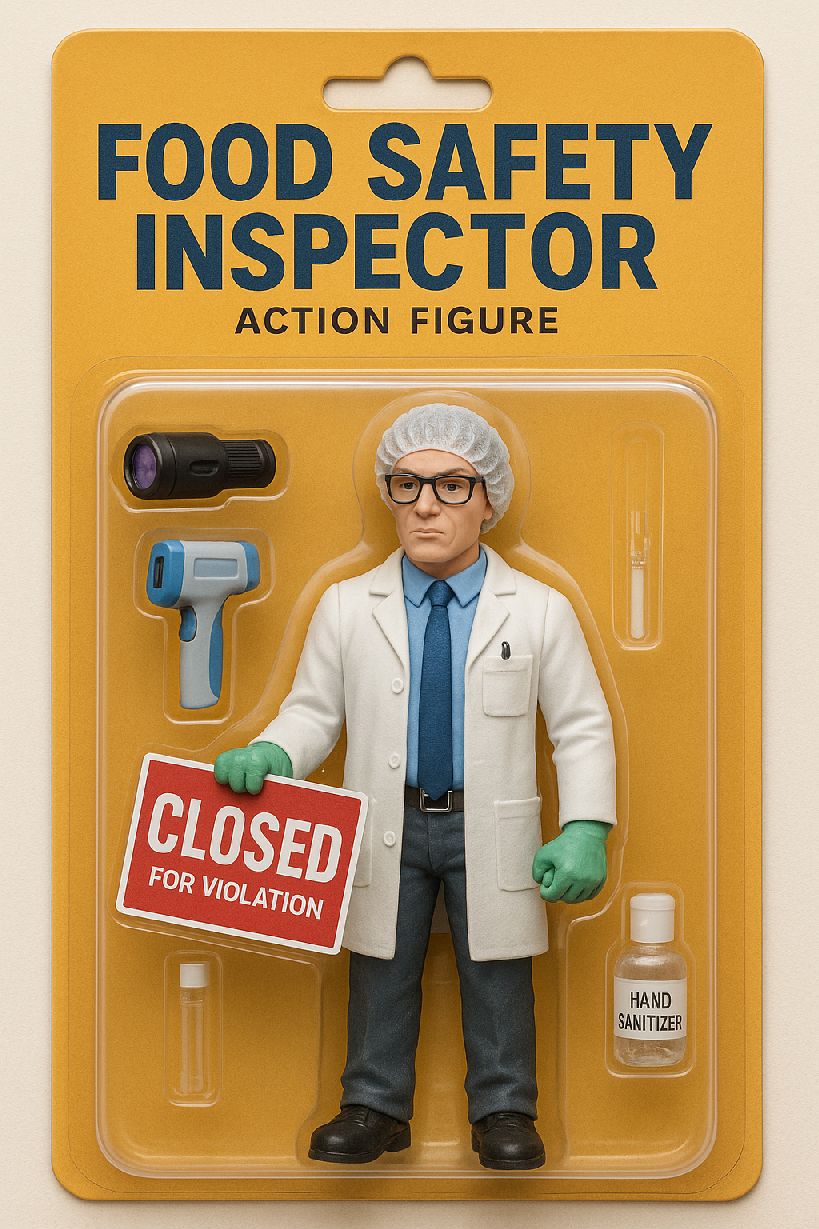
Food and feed (and even in cases non-food) inspectors workingin the "farm to fork" chain are a multi-disciplinary, multi-agency network of professionals, including (local and state)government officials, independent auditors, and private-sector specialists.
Their roles are to ensure food (animal)feed and consumer goods (packagematerial etc.) are safe, are of good quality, and comply with regulatory standards at every stage of production (including farming), processing, packaging, transport, and sale. It is also known as the "from farm to fork" principle.
Here is a breakdown of who these inspectors are and their roles at each stage:
1. Primary Production (Farm & Field)
- Agricultural Officers & Inspectors: Inspect and checks farming practices (including organic farming) for compliance with regulations on pesticide use, fertilizers, and environmental hygiene, including the logs etc.
- Veterinarians (Official Veterinarians - OVs): Inspect livestock for health and welfare, housing and stables and monitor the use of veterinary medicinal products (e.g., antibiotics) to ensure food safety later in the food chain.
- Fisheries Inspectors: Monitor fishing vessels and aquaculture facilities, quota and closed areas at sea, processing plants and transport (coldchain) to ensure compliance with catch and hygiene standards.
2. Processing & Manufacturing (Slaughterhouse to Factory)
- Meat Inspectors / Official Veterinarians: Conduct mandatory ante-mortem (before slaughter) and post-mortem (after slaughter) inspections of livestock and meat to identify illness, possible signs of pathogens and contaminants. This also includes transport facilities and gathering places for transport.
- Food Safety Inspectors (Environmental Health Officers): Audit and inspection on the impementation of Hazard Analysis and Critical Control Point (HACCP) systems to ensure food processing, storage and sales is done under safe, hygienic conditions. Checking of traceability of food and feed back to the origin.
- Quality Assurance (QA) / Quality Control (QC) Inspectors: Private sector staff who verify that products meet company and safety standards, such as ISO 22000.
3. Distribution, Transportation & Storage
- Import/Export Inspectors (harbours and airports): Check of food items at borders for compliance with national and EU food laws. Do sampling In case of (EU) regulations are set to check on forbidden or limitations on the use of Plant protecting products (PPP’s) in certain foods, legumes and fruits.
- Document checks on products of animal origin and live animals.
4. Retail & Food Service (Supermarket to Fork)
- Environmental Health Officers (EHOs) / Authorized Officers: Local council/municipality and regional or national employed officials who inspect local transport and delivery, restaurants, cafes, and grocery stores for hygiene, labelling, and temperature control. Focus on employee hygiene practices (part of HACCP and/or company standards), cleaning protocols and control of rodents.
5. Regulatory & Surveillance Agencies
- Governmental Agencies: Such as EFSA (EU), or local food safety authorities (e.g., NVWA in the Netherlands). They set policies (based on EU and national laws), schedule and perform audits, and manage food recall systems (e.g., RASFF and IRASSF and the alert and cooperation system ACN).
- Laboratory Technicians: Analyse samples for pathogens, chemical residues, and contaminants and forbidden substances.
6. Third-Party and Independent Auditors
- Certification Body Inspectors: Third-party agencies (e.g., SGS, Kiwa) that verify compliance with voluntary quality assurance schemes or safety standards, such as IFS or BRCGS.
Key Responsibilities of inspectors Across the Chain (Farm to Fork approach)
- HACCP Audits: Ensuring and enforcing that food safety plans are followed.
- Traceability Checks: Verifying the ability to trace food back to its origin.
- Sampling & Testing: Taking samples of food for laboratory analysis.
- Enforcement: Issuing notices and/or prosecuting businesses that violate safety laws.